


In Biella, Italy, known for its textile industry but now facing issues due to abandoned factories and an overreliance on cars, we propose a mobility solution.
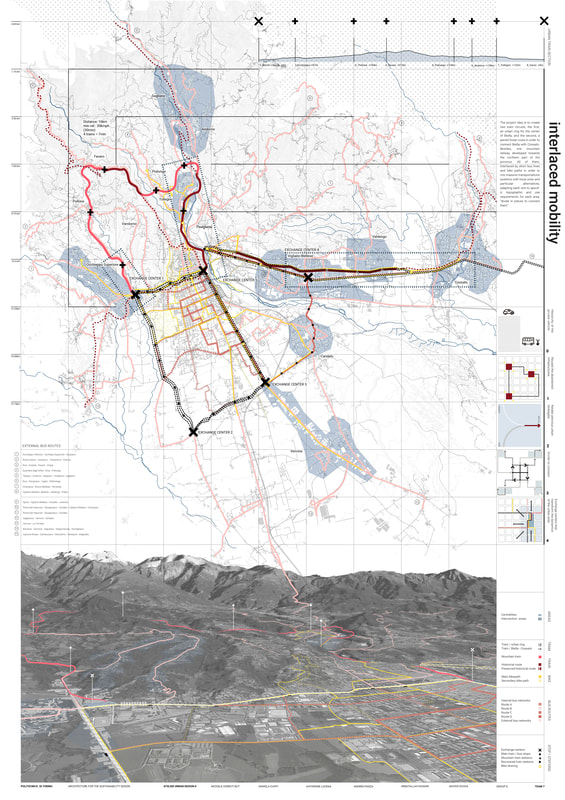
Our plan includes two tram circuits: one circling the city center and another connecting Biella to Cossato. We’ll also introduce a mountain railway in the northern province. These systems will be complemented by buses, bike paths, and exchange centers in repurposed buildings, enhancing connectivity and revitalizing the city.
In Biella, Italy, a city renowned for its textile production but now marked by abandoned industrial buildings due to the migration of producers, there’s a pressing mobility issue.
The city currently caters heavily to cars, while neglecting other transportation options and pedestrian-friendly infrastructure, creating significant challenges for the local population. Our proposed solution is to reimagine mobility through a blend of modern innovation and historic inspiration. We aim to repurpose the city’s abandoned infrastructure and revive forgotten modes of transportation like trams and trains, which once efficiently served the city before the automobile era.
Concept
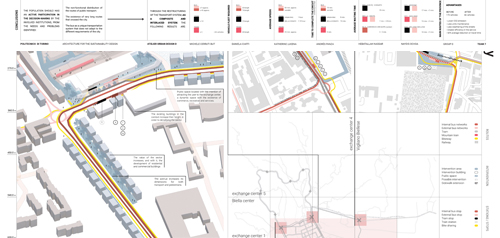
To address these mobility challenges, we propose the creation of two tram circuits. The first will encircle the heart of Biella, enhancing accessibility within the city center. The second will be a paired linear route connecting Biella to Cossato, promoting connectivity between neighboring areas. Additionally, a mountain railway will be developed in the northern part of the province to cater to the region’s unique topography.
To ensure seamless integration, these transportation systems will be complemented by internal and external bus lines and bike paths. This holistic approach combines mass transit options with localized alternatives, tailoring each to the specific needs and terrain of the area. By breaking the city into interconnected segments, we can address varying scales and accommodate diverse populations.
Strategically placed exchange centers, housed in repurposed abandoned buildings, will serve as vital junctions, enabling easy transitions between different modes of transportation. These centers will not only facilitate mobility but also breathe new life into neglected urban spaces. They will create public gathering areas and offer essential services, reinvigorating Biella’s urban fabric and fostering renewed interest in this picturesque Italian city.
 UGUZZONI ARCHITETTI