

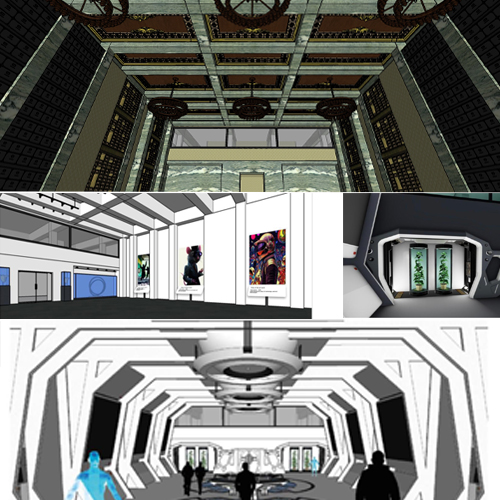
Gallerie d’Italia Turin is reimagining the museum experience by merging physical and virtual realms. There were created unique, immersive exhibitions in underutilized spaces, connecting them seamlessly with the virtual world. A highlight is a cutting-edge virtual reality journey through the building’s past, present, and a futuristic gallery, redefining how visitors engage with art, history, and technology.
Gallerie d’Italia Turin embarked on a visionary mission to redefine the museum experience, blending the physical and virtual realms into a seamless tapestry of art and history.
This ambitious project seeks to not only attract visitors but to immerse them in innovative, technology-driven encounters that transcend traditional museum visits.

Concept
At its core, the project revolves around crafting distinct, immersive experiences for each temporary exhibition, capitalizing on the spatial, visual, and architectural uniqueness of each installation. The aim is to offer visitors a fresh and captivating encounter with every visit to the museum, transcending the boundaries of conventional art appreciation.
A central challenge lies in harnessing existing technologies to reimagine underutilized spaces within the museum’s premises. These spaces, often overlooked, include junctions, lift landings, and corridors. The goal is to convert them into meaningful, interactive zones that foster engagement and interaction among visitors. The proposals not only revolve around enriching the physical museum but also seamlessly connecting it with the virtual sphere. This integration caters to diverse audience preferences and aligns with the distinctive identities of individual art projects.
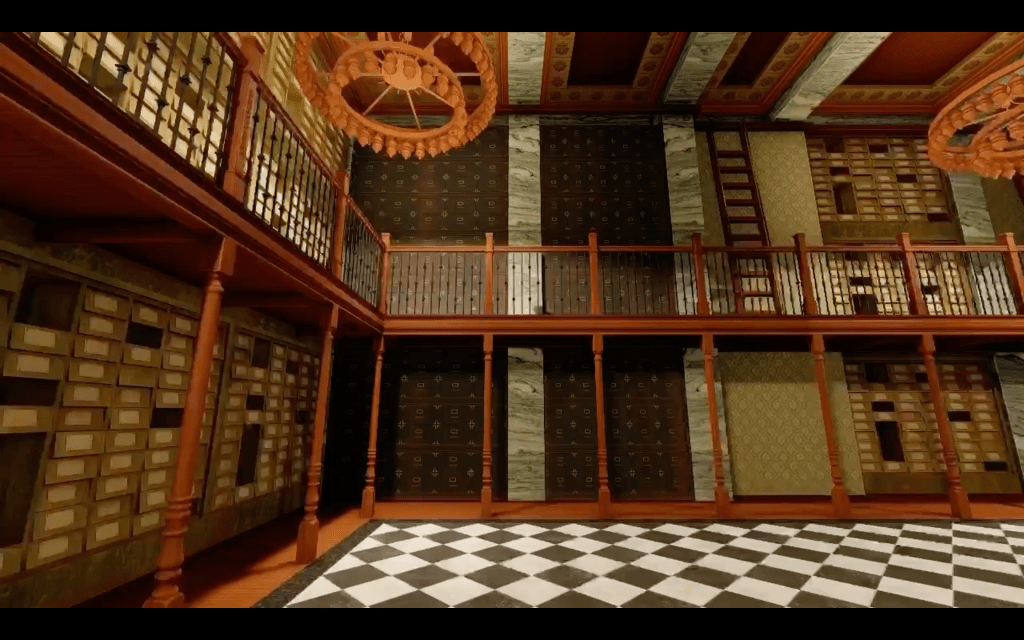
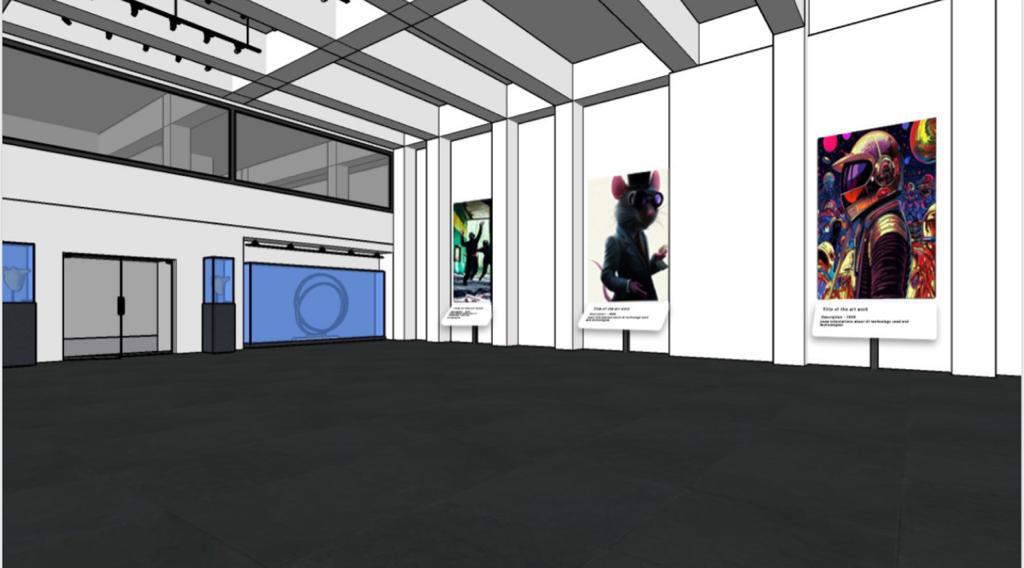
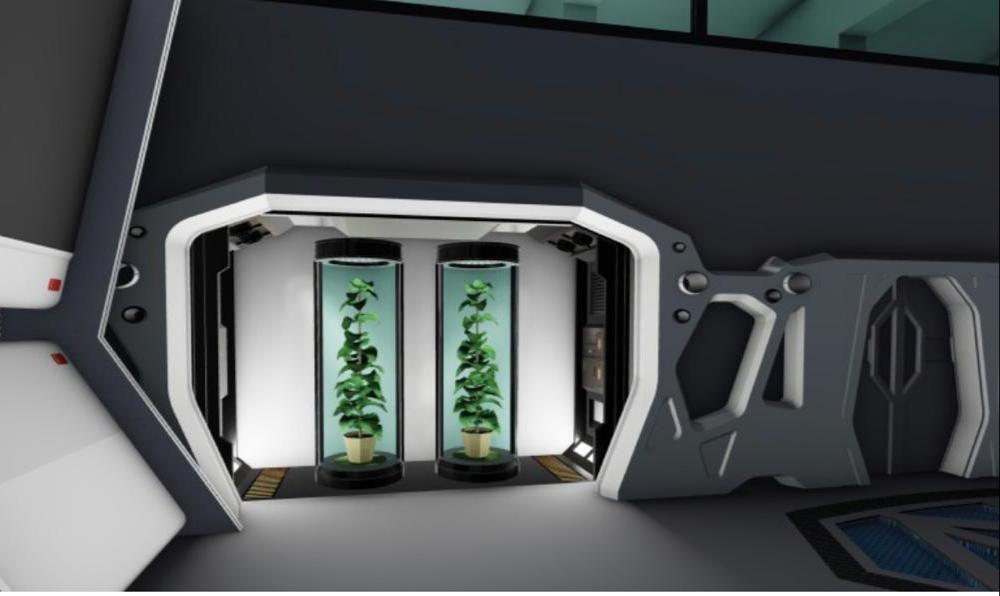
One striking facet of this transformation is the celebration of the building’s evolution from a bank to a gallery. To bring this narrative to life, a cutting-edge virtual reality (VR) experience has been envisioned, structured into three distinct modes: past, present, and future.
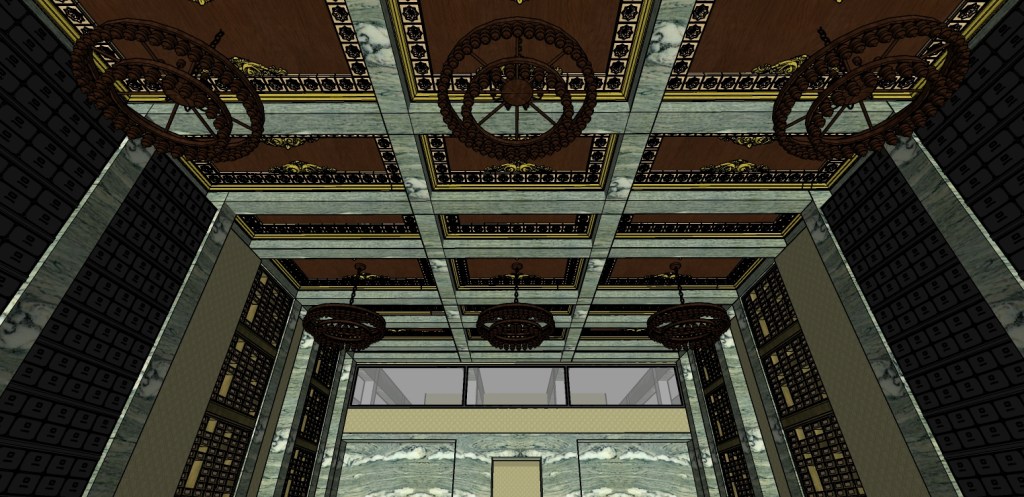
The past mode offers a journey through time, showcasing the building’s earlier role as a bank. Visitors will traverse history through an interactive time dial, witnessing the old bank’s historically accurate 3D environment. Dialogue with AI-powered NPCs powered by OpenAI’s GPT-3 API will enable visitors to converse with figures from the past.
In the present mode, visitors can personalize their experience by curating their own art collection within the gallery. The present-day reconstruction faithfully models the real spaces that currently constitute the museum, ensuring an authentic representation of the existing museum layout. The DALL-E API generates custom artwork based on user prompts, allowing for a highly personalized and engaging visit.
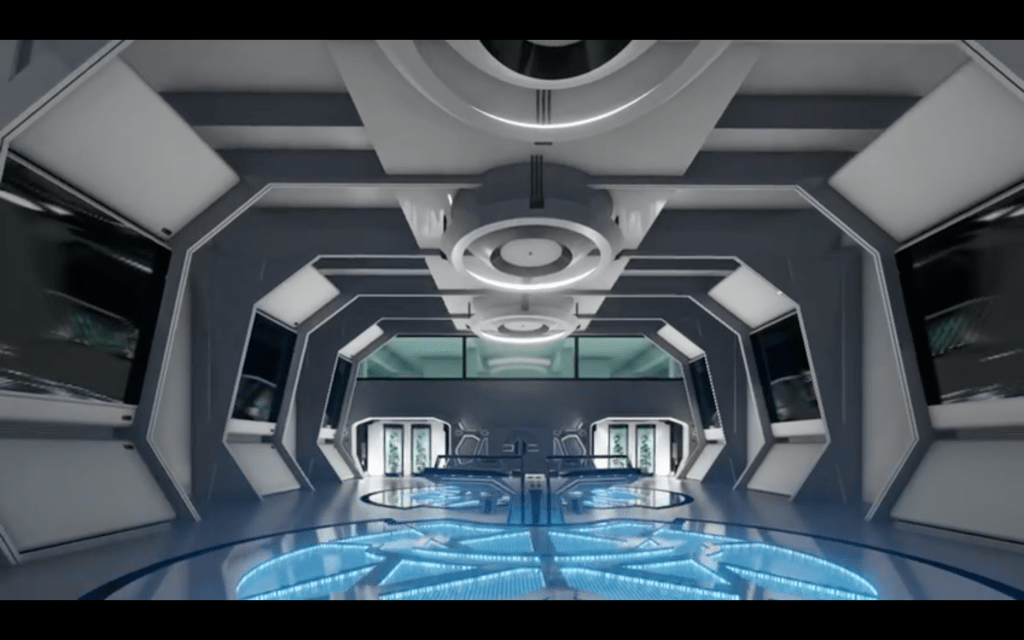
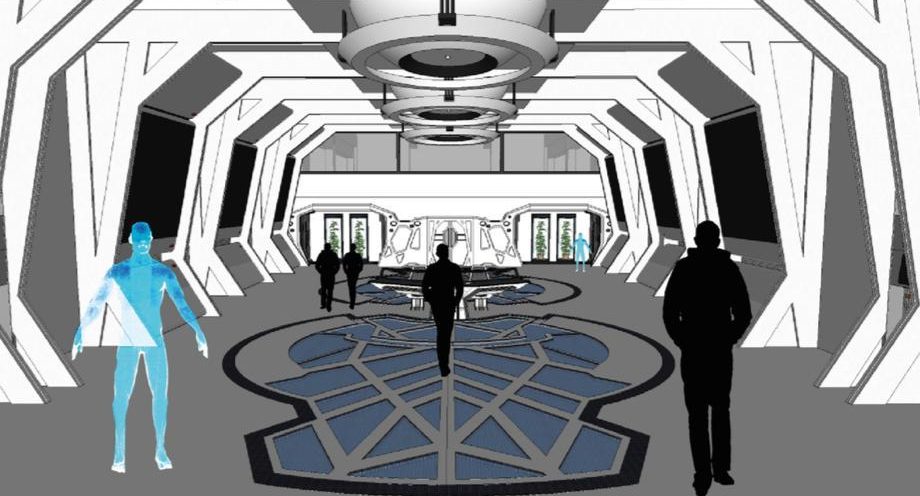
The future mode provides a glimpse of what lies ahead, offering a sci-fi rendition of the space enriched with advanced technologies.The museum of the future envisions captivating displays featuring species of animals and plants that are commonplace today but may become rare or extinct in the future. Visitors will have the unique opportunity to explore these exhibits both in person and as holographic representations, making it possible for individuals to participate in the museum experience from the comfort of their homes via VR headsets. Interactive holograms, tasks, and game features transport visitors into a futuristic realm, allowing them to explore the potential evolution of the gallery space.
This visionary project not only transforms Gallerie d’Italia Turin into a hub of innovation but also reinvents the very concept of museum visits. It seamlessly melds architecture, history, technology, and art, inviting visitors to embark on an unforgettable journey through time and imagination.
 UGUZZONI ARCHITETTI