

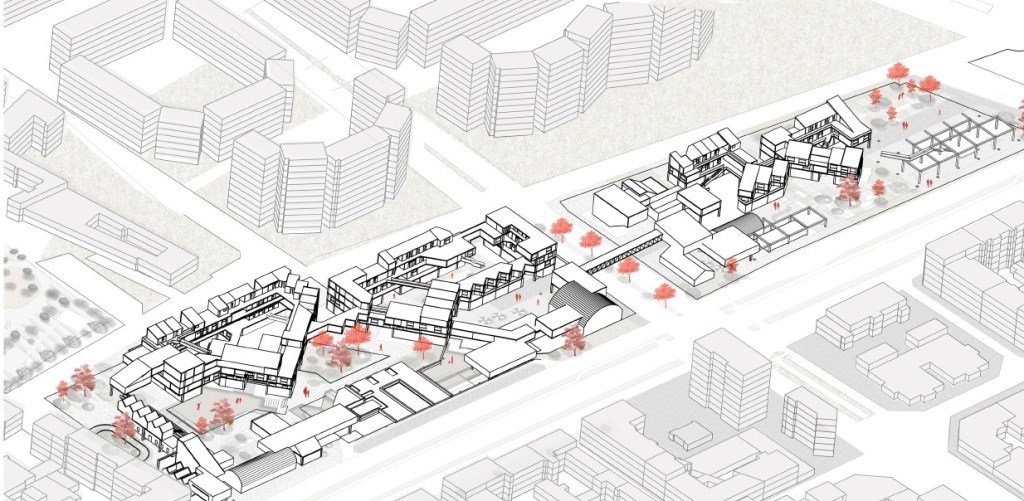
In Turin, Italy, the ‘Il Cortile del Quartiere’ project emerged in response to urban challenges in a neglected part of the city. This complex was designed to address the diverse needs of the community, including immigrants and students, by providing healthcare, retail, residences, and communal spaces. Drawing inspiration from traditional Italian courtyards, the project aimed to revive public interaction in the neighborhood by carefully integrating familiar shapes and functional elements. The result is a unique deconstructivist blend that transformed this once-abandoned area into a vibrant hub known as ‘The Neighborhood Courtyard’
Situated in Turin, Italy, in 2019, the project “Il Cortile del Quartiere,” or “The Neighborhood Courtyard,” was conceived in response to a unique set of urban challenges
The location chosen for this ambitious endeavor was a vast and abandoned section of the city. This area, characterized by a diverse immigrant population and numerous residential buildings, presented a multitude of pressing needs. Additionally, Turin, being a city with a significant demand for student housing, offered an opportunity to address this requirement
Concept
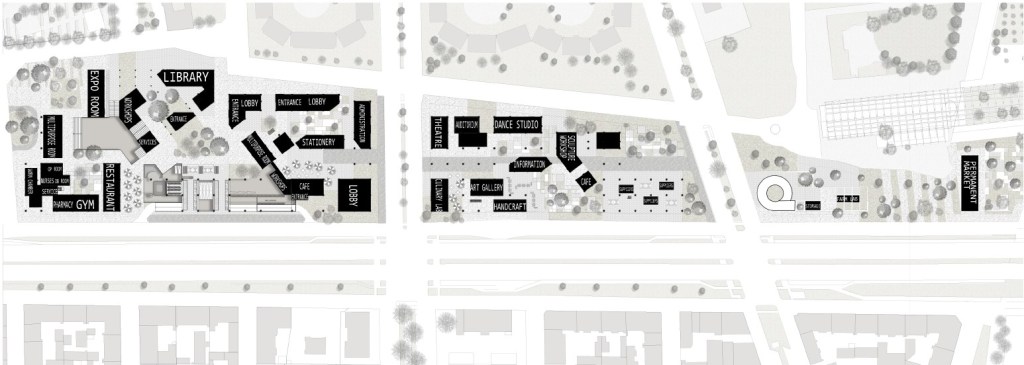
The overarching idea behind this project was to create a comprehensive complex that could cater to a wide range of these pressing needs. The envisioned complex would encompass various facilities, including healthcare services for immigrants, retail stores, restaurants, student residences, workshops, playgrounds, and more. The name, “Il Cortile del Quartiere,” which translates to “The Neighborhood Courtyard” in English, draws inspiration from the rich tradition of Italian courtyard activities. However, it was noted that many of the public courtyard spaces in the newer buildings within the urban context had become enclosed and isolated, lacking thoughtful design tailored to the needs of the inhabitants.
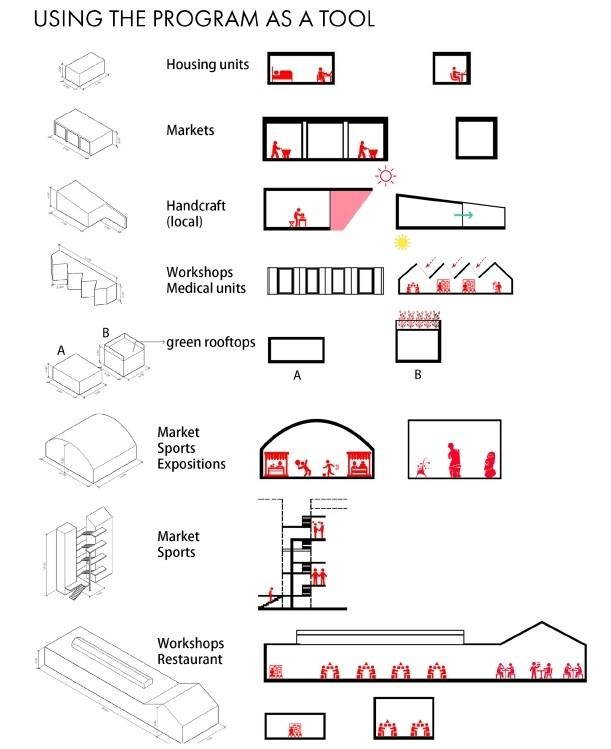
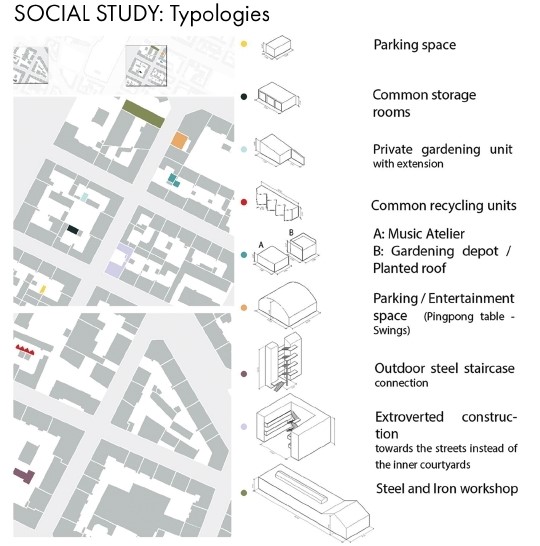
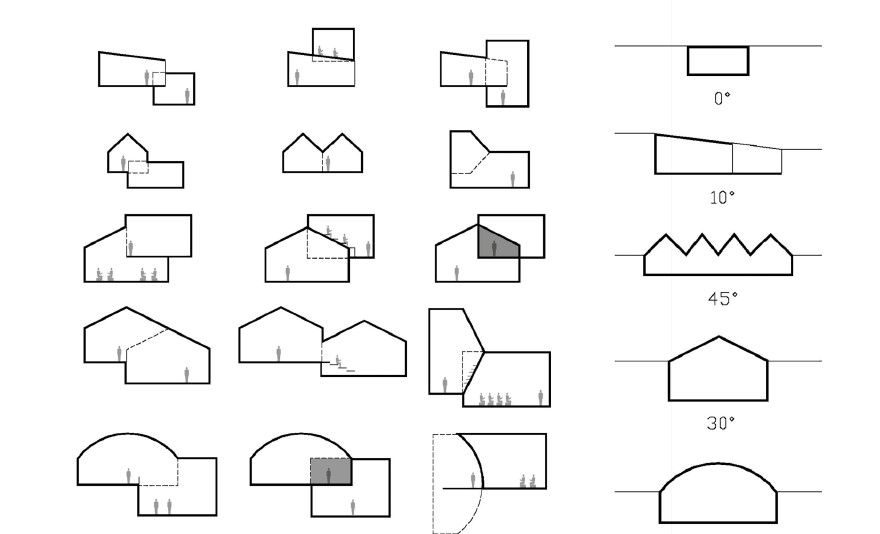
To address this issue, the project sought to transform the Spina 3 terrain into an expansive complex of courtyards designed to encourage community interaction. Drawing inspiration from the unique shapes and forms found in the courtyards of older buildings in the area, which had been molded by the people who inhabited them over time, the design team incorporated these characteristic shapes into the project. Each shape was assigned a specific function, carefully considering the most suitable form for each activity.
Furthermore, the positioning of each element within the complex was meticulously determined based on functional requirements and contextual conditions. The goal was to create a harmonious and efficient layout that would best satisfy the diverse needs of the community. The result was a distinctive deconstructivism blend of architectural elements that harmonized with the surrounding environment while providing essential services and amenities to the residents, immigrants, and students, thereby transforming this once-abandoned part of the city into a vibrant and interconnected hub known as “Il Cortile del Quartiere”
 UGUZZONI ARCHITETTI